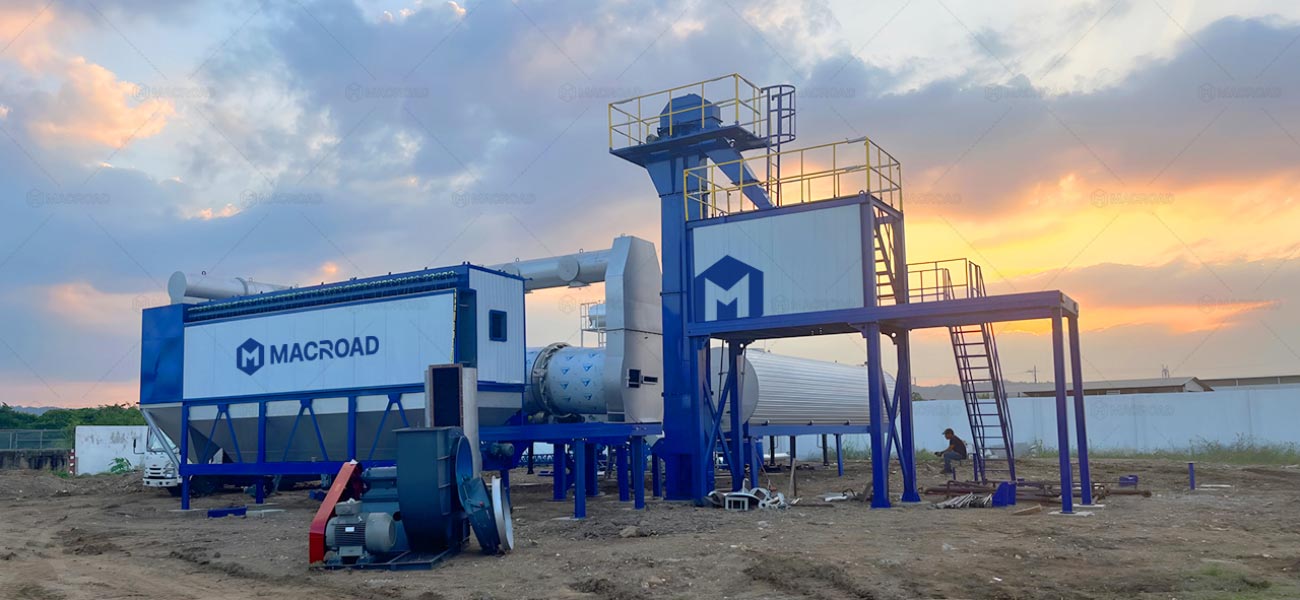
Latin America is entering an era of overlapping highway construction programs. National road upgrades, regional connectivity projects, and concession-based expressways are often executed simultaneously, sometimes by the same contractors or within the same supply radius. Under these conditions, construction efficiency is no longer determined only by equipment capacity or workforce size. Instead, asphalt plant scheduling has become a decisive operational lever that directly affects project progress, cost control, and pavement quality.
When multiple projects run in parallel, inefficient scheduling can lead to production bottlenecks, idle paving crews, material waste, and escalating logistics costs. Conversely, a well-structured scheduling strategy allows contractors to maximize plant utilization, stabilize supply, and respond flexibly to changing site demands.
The New Scheduling Challenge In Parallel Highway Projects
In earlier project models, a single asphalt plant often served one major highway at a time. Today, it is common for one production system to supply several projects simultaneously, each with different timelines, distances, and technical specifications.
Parallel projects introduce several challenges. Demand peaks often overlap, transport routes compete for the same fleet, and unexpected weather or permitting delays can shift paving windows with little notice. Without a dynamic scheduling framework, even a technically advanced hot mix asphalt plant(planta de asfalto en caliente) may fail to deliver its full productivity potential.
In Latin America, these challenges are amplified by long transport distances, complex topography, and varying regulatory environments between regions. Effective scheduling must therefore integrate production planning, logistics coordination, and site-level execution.
Why Asphalt Plant Scheduling Directly Affects Construction Efficiency
Synchronizing Production With Paving Windows
Asphalt paving is highly time-sensitive. Material temperature, delivery rhythm, and laying speed must align precisely to meet quality standards. Poor scheduling leads to trucks waiting at the plant or, worse, pavers waiting on site.
By aligning plant output schedules with actual paving windows across multiple sites, contractors can reduce idle time and ensure continuous operation. This synchronization is particularly important when one plant supplies both daytime urban works and nighttime highway paving.
Maximizing Plant Utilization Without Overloading
Running an asphalt plant at full capacity continuously may appear efficient, but in multi-project scenarios it often causes maintenance overloads and increases failure risk. Smart scheduling balances peak output periods with planned downtime, ensuring stable long-term operation.
This approach allows a single production system to support multiple projects without compromising reliability or product consistency.
Practical Scheduling Strategies For Multiple Parallel Projects
Project-Based Time Slot Allocation
One effective method is allocating fixed production time slots to each project. For example, Project A may receive early morning output, while Project B is scheduled for afternoon and evening supply.
This structure simplifies coordination and allows site teams to plan labor and equipment usage more accurately. It also reduces last-minute production changes that often disrupt plant operations.
Distance-Based Priority Scheduling
In Latin America, hauling distance significantly affects asphalt temperature control and fuel costs. Scheduling priority should consider transport distance, assigning closer projects during peak temperature-sensitive operations and more distant sites during periods with lower environmental risk.
This strategy helps maintain paving quality while optimizing logistics efficiency.
Flexible Output Planning Using Modular Capacity
Plants with modular or adjustable output configurations offer greater scheduling flexibility. Contractors can increase or reduce production rates depending on daily project demand, avoiding unnecessary overproduction.
In this context, a small asphalt plant can play a strategic role by supporting secondary or intermittent projects, freeing the main plant to focus on high-volume highway sections.
Equipment Selection And Scheduling Go Hand In Hand
Centralized Plants Versus Mobile Units
Centralized plants are suitable for large, long-term highway programs, but their scheduling becomes complex when serving dispersed sites. Supplementing them with mobile units can significantly improve responsiveness.
Understanding the mobile asphalt plant price(planta de asfalto movil precio) relative to transport savings and schedule stability is essential. In many cases, deploying a mobile unit near one project reduces pressure on the central plant and shortens overall construction timelines.
Matching Plant Size To Project Portfolio
Not all projects require high-capacity production. Using oversized equipment for small or intermittent jobs often leads to inefficient scheduling and higher operating costs.
A small asphalt plant(planta asfáltica pequeña) can be dedicated to maintenance works, ramps, or secondary roads, allowing mainline highway paving to proceed without interruption. This portfolio-based equipment allocation improves overall system efficiency.
Digital Tools And Data-Driven Scheduling
Real-Time Production And Logistics Monitoring
Modern scheduling increasingly relies on real-time data from plant control systems, truck tracking, and site feedback. By monitoring output, delivery times, and paving progress, managers can adjust schedules dynamically rather than relying on static plans.
This is particularly valuable when weather conditions or site constraints change unexpectedly, which is common in many Latin American regions.
Forecast-Based Demand Planning
Using historical production data and project schedules, contractors can forecast demand peaks weeks in advance. This enables proactive maintenance planning, fuel procurement, and workforce allocation, reducing the risk of unplanned shutdowns during critical paving phases.
Organizational Coordination As A Scheduling Multiplier
Aligning Plant Operators And Site Teams
Even the best scheduling plan fails without effective communication. Regular coordination meetings between plant managers, logistics coordinators, and site supervisors ensure that production plans reflect real on-site conditions.
Clear escalation mechanisms also help resolve conflicts when multiple projects compete for limited production capacity.
Standardizing Mix Designs Where Possible
Using standardized mix designs across projects simplifies scheduling by reducing changeover time at the hot mix asphalt plant. While technical requirements may vary, harmonizing specifications where feasible improves production continuity and reduces operational complexity.
Conclusion
In the era of multiple parallel highway projects, improving construction efficiency in Latin America depends increasingly on how well asphalt plant scheduling is managed. Effective scheduling transforms asphalt production from a reactive support function into a proactive efficiency driver.
By combining project-based time allocation, distance-aware logistics planning, appropriate use of mobile and small asphalt plant solutions, and data-driven decision-making, contractors can reduce downtime, control costs, and deliver higher-quality pavements. In this competitive environment, scheduling excellence is no longer optional—it is a core capability for sustainable highway construction success.

Comments
No comments yet. Be the first to react!